Showing posts with label Educational Approach. Show all posts

Sunday, 28 April 2013

Glenn Doman Method

Learn from the stage of YOUNG BABY?!!


The baby Fatih has learned to read the Glenn Doman flashcards since the age of 7 months. See! Fatih can read  a lot of words now!


Glenn Doman
Glenn Doman (GD) Method encourages that young babies should learn from the early years. Besides, it focuses on the right brain training. However, differently from Shichida Method which is classroom-based, GD method is home-based. From this GD method, I get a belief with "Every child can be a baby genius!".

Glenn Doman's books:
1. How To Teach Your Baby To Read (1964)
2. How To Teach Your Baby Math (1979)
3. How To Teach Your Baby To Be Physically Superb (1988)

Doman's daughter Janet and son Douglas's books:
1. How Smart Is Your Baby?: Develop And Nurture Your Newborn's Full Potential (Janet & Glenn, 2006)
2. How To Teach Your Baby To Swim: From Birth To Age Six (Douglas, 2006)


“The more you test him, the slower he will learn and the less he'll want to do. The less you test him, the quicker he will learn and the more he'll want to learn. Knowledge is the most precious gift you can give your child. Give it as generously as you give him food.” 

― Glenn Doman, How To Teach Your Baby Math


You may see other links:
1. Doman Flash Cards (To create your own flashcards by using your creativity is rather than buying!haha)
2. Doman Method

Wednesday, 17 April 2013

Theory of Multiple Intelligence (Howard Gardner)


"Kids go to school and college and get through, but they don't seem to really care about using their minds. School doesn't have the kind of long term positive impact that it should."

-- Howard Gardner


Multiple Intelligence
Howard Gardner has identified seven distinct intelligence. Gardner (1991) purposed that children possess different kinds of minds and therefore learn, remember, perform, and understand in different ways. According to this theory, "we are all able to know the world through language, logical-mathematical analysis, spatial representation, musical thinking, the use of the body to solve problems or to make things, an understanding of other individuals, and an understanding of ourselves. Where individuals differ is in the strength of these intelligence - the so-called profile of intelligence -and in the ways in which such intelligence are invoked and combined to carry out different tasks, solve diverse problems, and progress in various domains."


The learning styles are as follows:


1. Verbal-Linguistic: words and language
2. Visual-Spatial: 3D picture and motion
3. Mathematical-Logical: calculation and thinker
4. Musical-Rhythmic: songs and music
5. Bodily-Kinesthetic: body movement and hands-on activities
6. Interpersonal: an understanding and interaction of others
7. Intrapersonal: an understanding of ourselves
8. Naturalist:the nature


These are the Apps for multiple intelligence!


Source: 
1. multiple intelligence
2. introduction of howard garnder


You may visit to R.E.A.L Kids Kindy which using Multiple Intelligence Approach !!!


Thursday, 4 April 2013

Pedagogy of Play

"Education is what the child does in order to discover...it is not about pouring information into an empty vessel."
David Attenborough, Enough Rope, ABC TV

"Play is about exploring the possible. In times of rapid change, exploring the possible becomes an essential skill."


The Power of Play
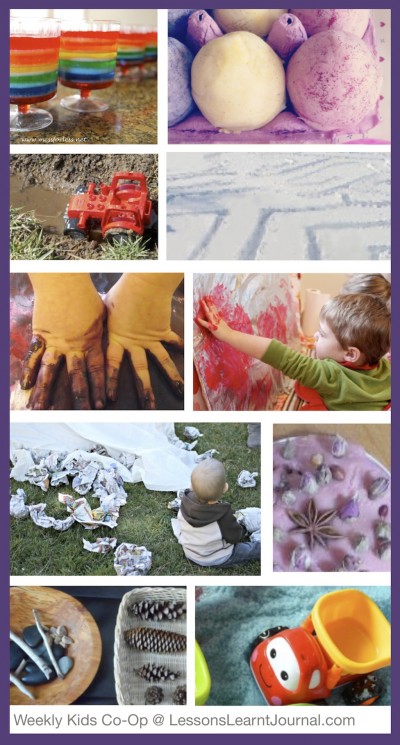
As we all know, a rigid education structure will prohibit a child to think critically. However, play is a powerful vehicle for learning, in which children can learn and form their knowledge through their learning experiences. Children will pay more concentration, attention to detail and show persistence when playing. Therefore, they always can learn better through play. We can also say that play is vital to a child's self-awareness, intellectual development and also their development of social skills.


"Learning experiences must allow children to use as many of their senses as possible, since it is through the sensory pathways that the brain interprets and creates its knowledge structures."
Queensland Early Years Curriculum Guidelines, p 27

There are few theories which state that children should learn through play and their senses, such as Montessori Method, Reggio Emilia Approach and High Scope Approach

Activity
The best and unique advantage of learning through play compared to other ways, I guess everyone know it... The playing kids who are sure FUN, HAPPY and ENJOYED!!! 


An example of Learning Through Play: Sight Word Twister

Materials:
Twister Game, Index cards, Marker,Tape
Or
you can use your own way to draw, such using chalk to draw the twister on a big blank paper. (It can be happened at outside or inside classroom)

Twister with Sight Words

Steps:
Firstly, fill each circle with a target sight word, letter of the alphabet, number, etc... (you can think of many different kinds of possibilites!)

Lastly, PLAY, LAUGH & LEARN!

Sunday, 10 March 2013

Suzuki Method


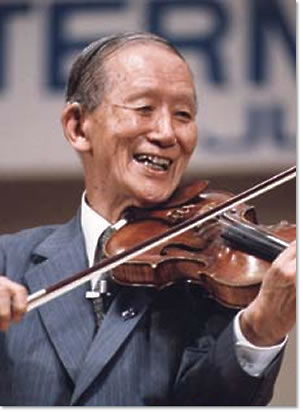
Dr Shinichi Suzuki - Founder of the music education movement known as the Suzuki Method.
Suzuki, one of the music education approach but not the Suzuki Motor Corporation we usually hear of.

 Dr. Shinichi Suzuki - the violinist
Dr. Suzuki used the concept 'character first, ability second'. He encouraged to produce a whole child, who truly loves music and with a good personality development rather than just knows how to master the musical instrument. Suzuki called his idea 'Talent Education'.
                                           
                                             "Character first, ability second"-- Dr. Suzuki


Suzuki Method
Dr Suzuki called his teaching method the Mother-Tongue Approach. This was because he was inspired by the fact which was children learn to speak their native tongue effortlessly. He believed that children can respond and develop the most difficult of skills, that of intelligible speech if they are prompted and encouraged by the parents' love and the family environment. 
When a child learns to speak, the following factors are at work:

~Listening                                      ~Memory
~Motivation                                    ~Vocabulary
~Repetition                                    ~Parental Involvement
~Step-by-step mastery                 ~Love

In the Suzuki approach each of these principles is used in the learning of an instrument (piano, violin, viola, cello, double bass, flute, guitar, voice, harp and recorder). The mother-tongue approach has successfully been applied to other fields such as art, poetry and mathematics.
Dr. Suzuki strongly agreed that music plays part of the important role in the children development.

                                         Autumn Festival 2005 Enrichment Class

                                                "...all children can be well educated..." 
                                                                                           -- Shin'ichi Suzuki

More information: Suzuki Method