Saturday, 23 March 2013

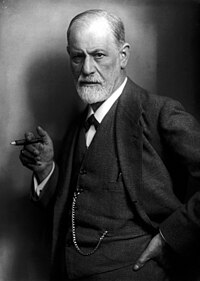
Theory of Sigmund Freud

Sigmund Frued

Psychoanalytic Child Development Theories

Sigmund Freud focused on the importance of childhood happenings and experiences, and it was almost about mental disorders rather than normal functioning.

Freud has recommended the Freud's stages of psychosexual development. In "Three Essays on Sexuality" (1915), Freud outlined these stages as oral, anal, phallic, latency and genital. Each stage involves the satisfaction of a libidinal desire and can later play a role in adult personality. If a child does not successfully complete a stage, Freud suggested that he or she would develop a fixation that would later influence adult personality and behavior. 


Source: Sigmund_Freud & Psychosexual Development

* For those who want to know extra knowledge on Sigmund Theory, can watch A Dangerous Method.
 It's a movie which talked about the comparison between Sigmund Frued's theory and Carl Jung.

Monday, 18 March 2013

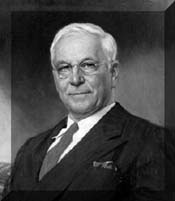
Theory of Erik Erikson


Erik Erikson focused on the theory of psychosocial development which is one of the theories of personality in psychology. Much like Sigmund Freud, Erikson believed that personality develops in a series of stages. Unlike Freud's theory of psychosexual stages, Erikson's theory describes the impact of social experience across the whole lifespan. 

There  is a main element in the psychosocial development stage, which is ego identity. According to Erikson, our ego identity is affected constantly according to new experiences and information we gain in our daily interactions with others. Besides, Erikson also believed that a sense of competence motivates behaviors and actions. Each stage in Erikson's theory is concerned with becoming competent in an area of life. If the stage is handled well, the person will feel a sense of mastery, which is sometimes referred to as ego strength or ego quality. If the stage is managed poorly, the person will emerge with a sense of inadequacy.

In each stage, Erikson believed people experience a conflict that serves as a turning point in development.

These are the psychosocial stages defined by Erikson:

Stage 1 - Trust Vs Mistrust

Stage 2 - Autonomy Vs Shame and doubt

Stage 3 - Initiative Vs Guilt

Stage 4 - Industry Vs Inferiority 

Stage 5 - Identity Vs Confusion

Stage 6 - Intimacy Vs Isolation

Stage 7 - Generativity Vs Stagnation

Stage 8 - Integrity Vs Despair

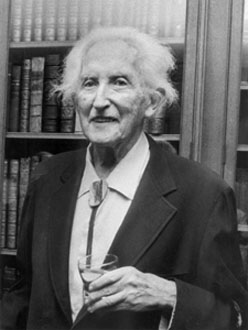
Theory of Robert Havingshurst

Robert Havingshurst
Robert Havingshurst identified 6 major stages in human life which are from birth to old age:

Stage 1: Infancy and early childhood (Birth - 6 years old)

Stage 2: Middle childhood (6-13 years old)

Stage 3: Adolescence (13-18 years old)

Stage 4: Early adulthood (19-30 years old)

Stage 5: Middle age (30-60 years old)

Stage 6: Late maturity (60 years and over)


       Besides, Havingshurst has proposed that each human has three sources for development tasks.

Source 1: Tasks that arise from physical maturation: Learning to walk, talk, control of bowel an urine, behaving in an acceptable manner to opposite sex, adjusting to menopuase.

Source 2: Tasks that arise from personal values: Choosing an occupation, figuring out ones philosophical outlook.

Source 3: Tasks that have their source in the pressures of society: Learning to read, learning to be responsible citizen.

The developmental tasks model that Havighurst developed was age dependent and all served pragmatic functions depending on their age.


Source: Robert_J._Havighurst

For more information: Theory of Robert Havingshurst

Theory of Arnold Gesell


"The family is both a biological and a cultural group. It is biologic in sense that it is the best arrangement for begetting children and protecting them while they are dependent. It is a cultural group because it brings into intimate association persons of different age and sex who renew and reshape the folkways of the society into which they are born. The household serves as a "cultural workshop" for the transmission of old traditions and for the creation of new social values."           
                                                                                                                -- Arnold Gesell


Arnold Gesell pursued the task of observing and recording the changes in child growth and development from infancy through adolescence.

Arnold Gesell is a maturationist who emphasized the physical and mental growth and he believed that the growth are strongly affected by heredity. Gesell classified few types of typical behaviours into 10 major areas as he called them as gradients of growth (Gesell & Ilg, 1949):


1. Motor characteristics


2. Personal hygiene

3. Emotional expression

4. Fears and dreams


5. Self and sex

6. Interpersonal relations

7. Play and pastimes

8. School life

9. Ethical sense

10. Philosophic outlook

Sunday, 10 March 2013

Suzuki Method


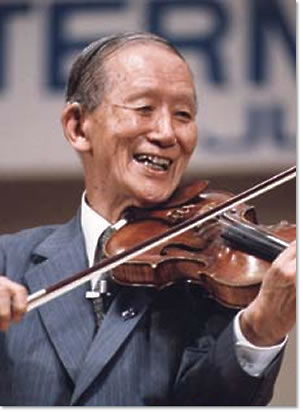
Dr Shinichi Suzuki - Founder of the music education movement known as the Suzuki Method.
Suzuki, one of the music education approach but not the Suzuki Motor Corporation we usually hear of.

 Dr. Shinichi Suzuki - the violinist
Dr. Suzuki used the concept 'character first, ability second'. He encouraged to produce a whole child, who truly loves music and with a good personality development rather than just knows how to master the musical instrument. Suzuki called his idea 'Talent Education'.
                                           
                                             "Character first, ability second"-- Dr. Suzuki


Suzuki Method
Dr Suzuki called his teaching method the Mother-Tongue Approach. This was because he was inspired by the fact which was children learn to speak their native tongue effortlessly. He believed that children can respond and develop the most difficult of skills, that of intelligible speech if they are prompted and encouraged by the parents' love and the family environment. 
When a child learns to speak, the following factors are at work:

~Listening                                      ~Memory
~Motivation                                    ~Vocabulary
~Repetition                                    ~Parental Involvement
~Step-by-step mastery                 ~Love

In the Suzuki approach each of these principles is used in the learning of an instrument (piano, violin, viola, cello, double bass, flute, guitar, voice, harp and recorder). The mother-tongue approach has successfully been applied to other fields such as art, poetry and mathematics.
Dr. Suzuki strongly agreed that music plays part of the important role in the children development.

                                         Autumn Festival 2005 Enrichment Class

                                                "...all children can be well educated..." 
                                                                                           -- Shin'ichi Suzuki

More information: Suzuki Method

Monday, 4 March 2013

Head Start Program


Head Start Program is a program started by United States Health Department and Human Service which has provided education, health and social services for children between 3 to 5 years old with their parent involvement services. For more clearer information, this service is mainly for the low-income children and family. Purpose of Head Start Program is to foster stable family relationships, enhance children's physical and emotional well-being, and create an environment to stimulate their strong cognitive skills.

Education
Education includes preschool education to national standards that have become de facto standards (Latin expression, means "concerning fact" or "in practice or actuality, but not officially established) for all US preschools.

Health services
Health services provided by Head Start includes:
  • Screenings
  • Health check–ups 
  • Dental check–ups 
Social services
Social services includes family advocates for parents and help the low income families how to in survive in the community.


Early Head Start is a federally funded community program for low-income families with infants, toddlers and pregnant women which is originated from Head Start Program.
Its mission is simple:
  • to promote healthy prenatal outcomes for pregnant women,
  • to enhance the development of very young children, and
  • to promote healthy family functioning.

It works with few important areas which are:
  • Child Development
  • Family Development
  • Community Building
  • Staff Development
  • Administration/Management
  • Continuous Development
  • Children with Disabilities
  • Socialization
  • Curriculum


A Source: More information about Head Start Program!Click Here~
                More information about Early Head Start Program!Click Here~

Pelan Pembangunan Pendidikan Malaysia 2013-2015

To know more about our future plan for Education, these are what I have searched from internet.

11 anjakan dalam Pelan Pembangunan Pendidikan Malaysia

1. Menyediakan kesamarataan akses kepada pendidikan berkualiti bertaraf antarabangsa.

2. Memastikan setiap murid profisien dalam bahasa Malaysia dan bahasa Inggeris.

3. Melahirkan rakyat Malaysia yang menghayati nilai.

4. Transformasi keguruan sebagai profesion pilihan.

5. Memastikan pemimpin berprestasi tinggi ditempatkan di setiap sekolah.

6. Mengupaya JPN, PPD dan sekolah untuk menyediakan penyelesaian khusus berasaskan keperluan.

7. Memanfaatkan ICT bagi meningkatkan kualiti pembelajaran di Malaysia.

8. Transformasi kebolehan dan keupayaan penyampaian pendidikan.

9. Bekerjasama dengan ibu bapa, komuniti dan sektor swasta secara meluas.

10. Memaksimumkan keberhasilan murid bagi setiap ringgit.

11. Meningkatkan ketelusan akauntabiliti awam.


Source: Here is the Laporan Awal Pelan Pembangunan Pendidikan Malaysia 2013-2025